SailGP CEO Sir Russell Coutts believes the introduction of group racing will deliver a better experience for fans, teams and broadcasters by improving the quality of the competition and making the action easier to follow.
SailGP has been trialing a group format extensively on practice race days during this season, and has already used it in both the New Zealand and Canadian events.

The league has now confirmed its intention to run group racing for the remainder of the season, including at this weekend's Emirates Great Britain Sail Grand Prix, with teams divided into two racing groups to create closer contests on the water.
Coutts said the move represents a natural evolution for the league as it enters its next phase of growth, with a focus on delivering a more consistent and engaging product for fans around the world.
“The first five years of SailGP were about proving the concept,” Coutts said. “Would this product work? Would it be commercially sustainable? The next phase is all about scaling the league, growing attendance at events, increasing broadcast audiences and delivering a more consistent product.
“That consistency applies across everything: the quality of racing, the format, the venues, the quality of the broadcast, the delivery of the hospitality experience and the calendar.
“With fourteen teams due to compete next season, it’s a format that we have been planning to evolve to for sometime.”
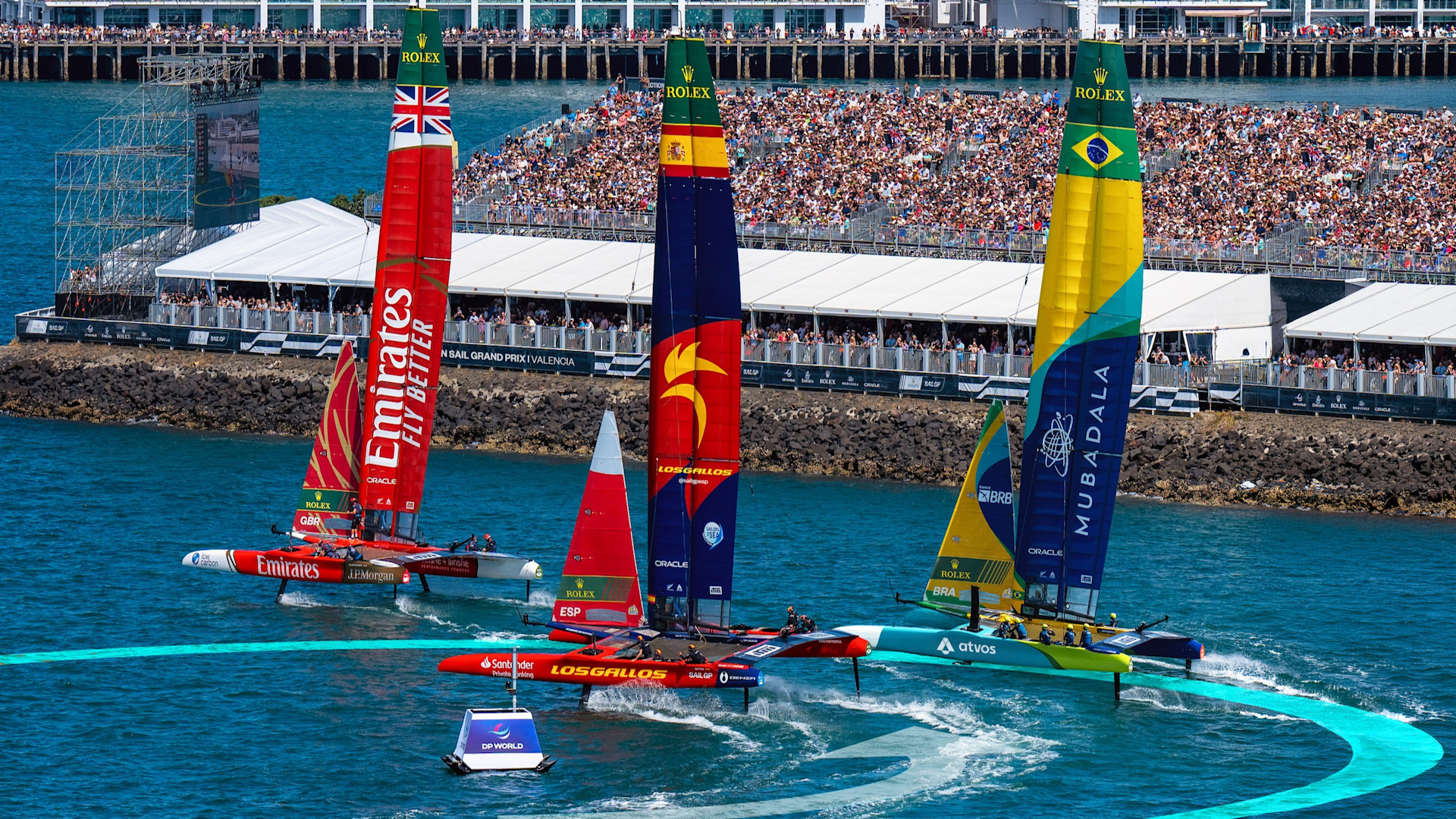
One of the key benefits of group racing is the improvement in racing quality, particularly in lighter wind conditions where large fleets can quickly become spread out.
While seeing a full fleet of F50s line up together creates an impressive spectacle, Coutts explained that the reality of racing in close proximity can make it challenging for teams to maintain competitive battles throughout the fleet.
“Thirteen boats on the start line together looked impressive, but in lighter winds, with the amount of disturbed air coming off the wingsails, the fleet spread out very quickly,” he said.
“You’d often have the leading boat sailing away in undisturbed wind and sometimes even lapping the boats at the back sailing in more turbulent wind. We felt the quality of racing, particularly in lighter conditions, improved with smaller fleets.”

The change also provides a significant boost to team visibility, ensuring more teams are consistently involved in the on-screen action.
Coutts said analysis of broadcast coverage showed that group racing creates more opportunities for teams across the fleet to receive meaningful exposure, compared with larger fleet races where the focus naturally concentrates on the leaders.
“At first, some teams thought they’d get less coverage because they were only racing in half the races,” he said.
“But when we analysed the coverage, it became clear that in the old format the cameras naturally focused on the leading pack and the teams at the back received little airtime.
“Now, more teams spend more time racing in the mix, which means they receive more broadcast coverage. From a commercial perspective, that’s a real benefit for the teams.”
The format also enhances the viewing experience for a broader cross-section of fans, with clearer storylines and easier-to-follow racing.
“If you’re not that familiar with sailing, having less boats makes it easier to follow,” Coutts said. “With fewer boats, they’re generally on the same leg of the course for a greater percentage of the race. Our broadcast team has also found they can cover more aspects of the racing in more detail. There was almost too much going on in the thirteen boat format.
“We can also start races much sooner after the completion of the previous race which means less downtime in the 90 minute broadcast. If things are running well, we can limit the time between races to three minutes, which allows just enough time for the free-to-air broadcasters to schedule their advertising breaks."
With SailGP continuing to grow towards its ambition of a 20-team league with 20 or more events, Coutts believes group racing will play an important role in building a more consistent and compelling global sports product.
“We believe we can grow to 10 boats in each fleet. Each time we add a new team, especially coupled with a home event, we gain a more engaged audience in that country.”
“We’re always going to continue to make decisions based on what’s best for the long-term growth and success of the teams and the league,” he said.
“Innovation has always been at the heart of SailGP’s DNA, and this is a natural evolution of the championship.”
The Emirates Great Britain Sail Grand Prix takes place in Portsmouth on July 25-26, with entertainment from pop sensations Jess Glynne and Craig David.
Don't miss out - grab a ticket HERE or find out how to follow from wherever you are in the world.
More from SailGP





Enjoy unrivaled access to exclusive content, special offers and top-tier competitions - all the action your way, and more!